
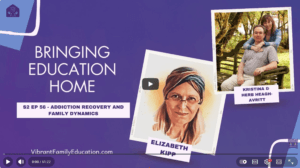
Addiction recovery and family dynamics are the focus of Episode #56 of the Bringing Education Home Podcast. Stress management specialist and best-selling author, Elizabeth Kipp joined hosts Herb and Kristina Heagh-Avritt for a deeply meaningful discussion around addiction recovery, family dynamics, and the importance of open dialogue. Here’s what you need to know from this insightful conversation, plus practical steps for supporting healthy, thriving families.
LISTEN HERE.
Breaking the Cycle: Talking About Difficult Topics
Too often, families facing addiction or emotional struggles remain silent, letting shame and misunderstanding take center stage. As Kristina reflected, “everyone goes through stuff, right? But…maybe even talk to your children and show your children about what’s going on and how you healed and changed so that there’s more understanding.” This approach breaks the generational cycle of hiding pain and fosters empathy and openness.
Elizabeth shared her personal journey, growing up in a home where the mantra was “we don’t talk about that.” This lack of communication led to feelings of isolation and confusion, a common experience among families struggling with addiction or trauma. She urges parents to embrace honesty with their children, explaining recovery and healing in age-appropriate ways to build a foundation of trust.
Understanding Addiction: Not Just a Problem, but a Response
A powerful message from the podcast is that addiction is not simply a “problem”—it’s an answer to deeper pain. Herb explained, “Addiction is someone’s answer to a problem they have because they don’t know any better…the drug is just the solution for that.” By focusing on the pain driving the addiction, families and professionals can more effectively support lasting recovery.
Elizabeth emphasized the importance of looking within for solutions rather than outward, where many only find temporary relief and further complications. Compassion, she says, is crucial — both for the individual in recovery and for their loved ones.
The Role of Family Dynamics: Connection, Co-regulation, and Boundaries
One of the most important takeaways is the concept of co-regulation, especially for young children. Before age seven, kids can’t regulate their emotions independently. Elizabeth emphasizes the importance of parents offering physical and emotional support, holding and comforting their child so they learn emotional balance through example.
Additionally, boundaries matter. Many in recovery, including Herb and Elizabeth, struggled with codependency and poor boundaries. Teaching children about healthy boundaries, understanding what they need and how to express it, lays the groundwork for healthier relationships and stronger self-esteem.
Open Communication: Addressing Mistakes and Healing Together
Mistakes will happen in any family, especially during recovery. Both hosts encouraged apologizing openly to children when things go wrong and asking how their actions affect them. This not only models self-awareness and responsibility, but also reinforces the connection and safety every child needs.
Including children in recovery conversations (without burdening them) and regularly checking in on their emotional needs helps create a “we” within the family unit, rather than focusing solely on the individual’s challenges. As Elizabeth suggests, ask, “How can we support you during this time?” and keep revisiting the question as circumstances change.
Removing Shame and Building Resilience
Throughout the episode, the panel repeatedly addressed shame, one of recovery’s most formidable barriers. Addiction is often the body’s best attempt to cope with imbalance; there’s no shame in surviving. By sharing stories and embracing vulnerability, families can dissolve shame and help each other feel seen and understood.
Key Takeaways:
– Talk openly about addiction and healing.
– Address pain, not just symptoms.
– Co-regulate and model healthy boundaries for your children.
– Apologize and communicate — mistakes are part of growth.
– Shame is not the answer; connection and support are.
If you found this article helpful, please share it with families who may benefit from these empowering strategies.
Final Thoughts and Resources
The conversation concluded with encouragement for listeners to seek professional help when needed, educate themselves about suicide prevention, and, most importantly, to keep talking. As Elizabeth says, there’s a path forward, and many have walked it successfully before.
For more tools, resources, and informed support, connect with Elizabeth for a free 15-minute Consultation.

2 Responses